 Download PDF of this full issue: v56n2.pdf (37.4 MB)
From Vietnam Veterans Against the War, http://www.vvaw.org/veteran/article/?id=4587
| Download PDF of this full issue: v56n2.pdf (37.4 MB) |
Vietnam Perkasie: A Combat Marine Memoir (Revised Edition)
by W.D. Ehrhart
(McFarland, 2026)
W.D. Ehrhart's Vietnam-Perkasie: A Combat Marine Memoir, now reissued unchanged, but with additional photographs, was originally published in 1983, a decade and a half after Ehrhart's 1967-68 tour of duty in Vietnam. The strength of this book was and remains its narrative mastery, its two-tier blend of the time of its vivid happenings: happenings which occurred to a teenager, which were absorbed and held in the retentive mind of the plus thirty-year-old war veteran who wrote the book we continue to hold in our hands, now some forty years after its original writing. If I can disagree with the author, who claims that his book "comes from the point of view of the 18-year-old living the experience rather than the voice of the author recollecting the war in later life," it seems to me rather that the viewpoint owes its immediacy to an exceptional memory harnessed into skillful design, and is inevitably the doubled voice of both the teenager and the mature war veteran writing.
Composing a narrative, by the very nature of writing, demands that we have a two-time structure: the time in which events happen, and the time in which they are spoken about and written down. Any narrative is only more or less immediate and spontaneous, and none can evade the processing of recall, or the oppressive subjectivity of memory. Immediacy in a memoir is always dependent on the sharp, truth-sensing selectivity of the speaker, which in Ehrhart's case is enhanced always by what every one of his five senses can bring to bear on what he describes.
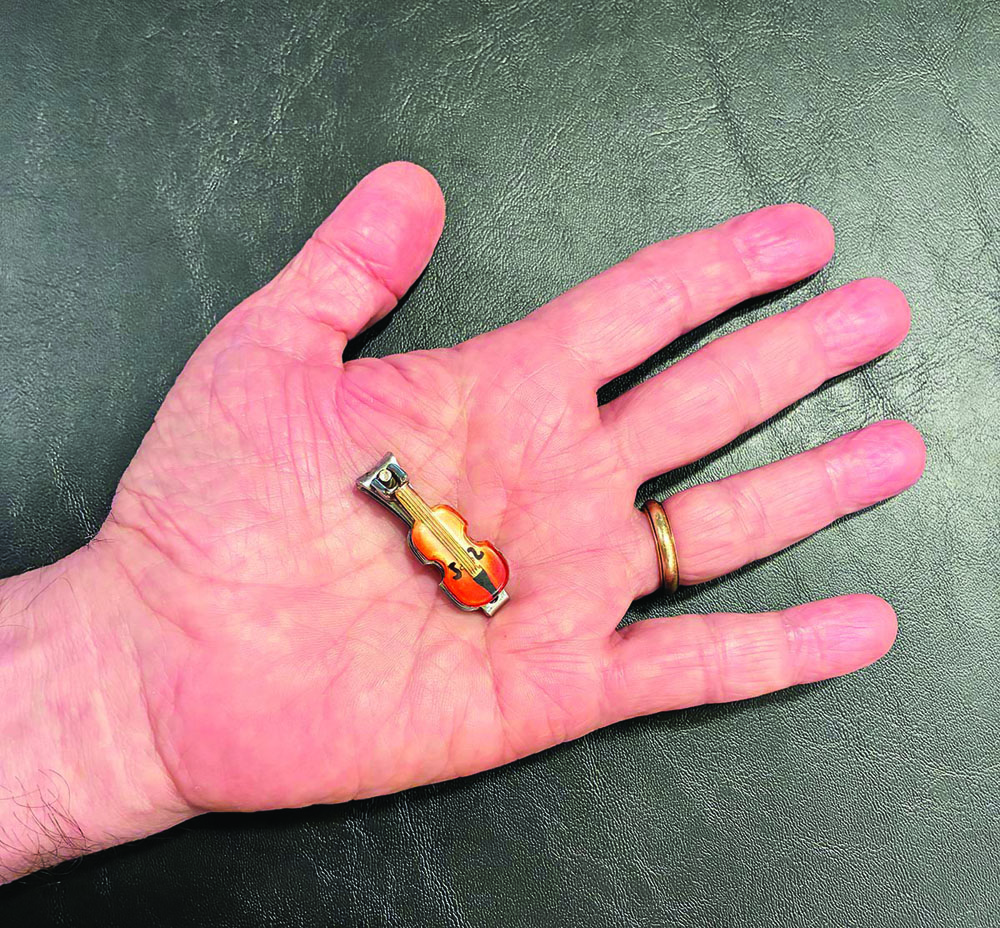
As an example of what I mean, take this detail, chosen from a patrol through an abandoned Catholic girl's school in Hue City in 1968, during Ehrhart's final combat exposure. "We searched the place, finding nothing but clothes, books, school papers, Vietnamese fashion and movie magazines, and toilet articles. Very little had been disturbed…In one room, I found a small fingernail clipper shaped like a guitar and covered with an orange enamel glaze. I put it in my pocket." Where is it now? Why was it remembered among these scenes of carnage and threat? Because it unaccountably and authentically was. Its very incongruity is testimonial. Or a tug at the heart of the adolescent male coming upon the vestiges of a lost adolescent femininity.
Nor does Ehrhart neglect what literary accomplices like metaphor and simile can provide—always with grim comic timing: an NVA soldier dies in a slump "with his back against the wall and his feet flopped out in front of him like a Mexican taking a siesta"; a hot, exhausted march in tropical heat "an endless game of slinky toy, unconsciously husbanding what little energy was available."
Above all, the operations of cosmic irony are evident everywhere–and of symbolic displacement. Showing us the breakdown of moral objections to killing, he explains to a new supervising officer: "We're United States Marines, sir, I said. We kill people." He gives us a boyhood memory of handling snakes with easy familiarity and no malice toward the serpent. But in Vietnam, Ehrhart says to a buddy, "I killed a snake today." When asked further about it, he replies: "Right by my hooch. It was just lying there, curled up in the sand. I beat it up for a while, and then I cut its head off." But Ehrhart remembers how he treated snakes at home, as a kid: "We used to catch snakes[…]with our bare hands. Dive right in the water after 'em. Take 'em home and keep 'em for pets. Funny. I don't know why I killed that snake today. Wasn't bothering anybody. Certainly not me."
Doesn't that snake stand in for the civilian women and children that in agony he confesses to a Navy chaplain that he had killed and abused as a United States Marine? Decades later, with these experiences still burning in him, Ehrhart writes a book showing how he, a diehard patriot, came to believe he was fighting a war that made no sense, political or ethical, and that, stage by stage, brutalized him as a human being.
The world that W.D. Ehrhart re-opens in this book is familiar to the readers of The Veteran. Unlike this reviewer, its veterans will recognize acutely and appreciate bits like Ehrhart's analysis of what happens to the rods and cones of exhausted eyes in strained night watches, or the perverse deficiencies of an M16, or his description of what it's like to build shelter out of sandbags and canvas puptents and to improvise latrines under heavy and constant fire. Other vets will slide into the acronym-loaded language describing vehicles and weaponry without needing glossaries. As the good intelligence scout the Marine Corps trained him from the age of 17 to become, there's a trim efficiency in Ehrhart's deployment of detail. It figures that graduating from Marine boot camp, Ehrhart was "A rifle sharpshooter...First in class from intelligence school. First in class from language school." His prose registers both targeted precision and military compression, knowing how to tuck in an event without burdensome explanation. Hence, there's a pop, and an indrawn breath as a small signal explodes into a cumulative significance about a war, or war itself. Yet the man who in his postwar life became a poet as well as historian also has a sense of the ridiculous that lightens, as well as broadens the moral good sense of what he's saying.
The narrative feat that Ehrhart performs is to ride a bicycle with a passenger: as the cyclist, he provides all the familiar, instantly recognizable tools, dress, and habitat of a war and its terrain, covering the boys and men in the process of fighting it, in mind and body; for the passenger, the neutral observer like me—maybe a wife, mother, daughter, or old college professor who never saw it, and would like to understand what happened over the course of a tour of duty—Ehrhart carries them through what is still a story with an extremely painful arc.
In his Preface to the new reissued edition of Vietnam-Perkasie, Ehrhart demonstrates that he knows how to benefit from good editing. The drag of the miserable, humiliated final sentence that constitutes the conclusion of Ehrhart's memoir—which a friend had suggested was the right ending for his memoir—enables Ehrhart to pinpoint the huge, essential sorrow of his and our terrible war brilliantly.
Lorrie Goldensohn wrote American War Poetry; Dismantling Glory: 20th Century British & American War Poet and articles on Vietnam War poetry.
|
| Bill still has the nail clipper. |
|
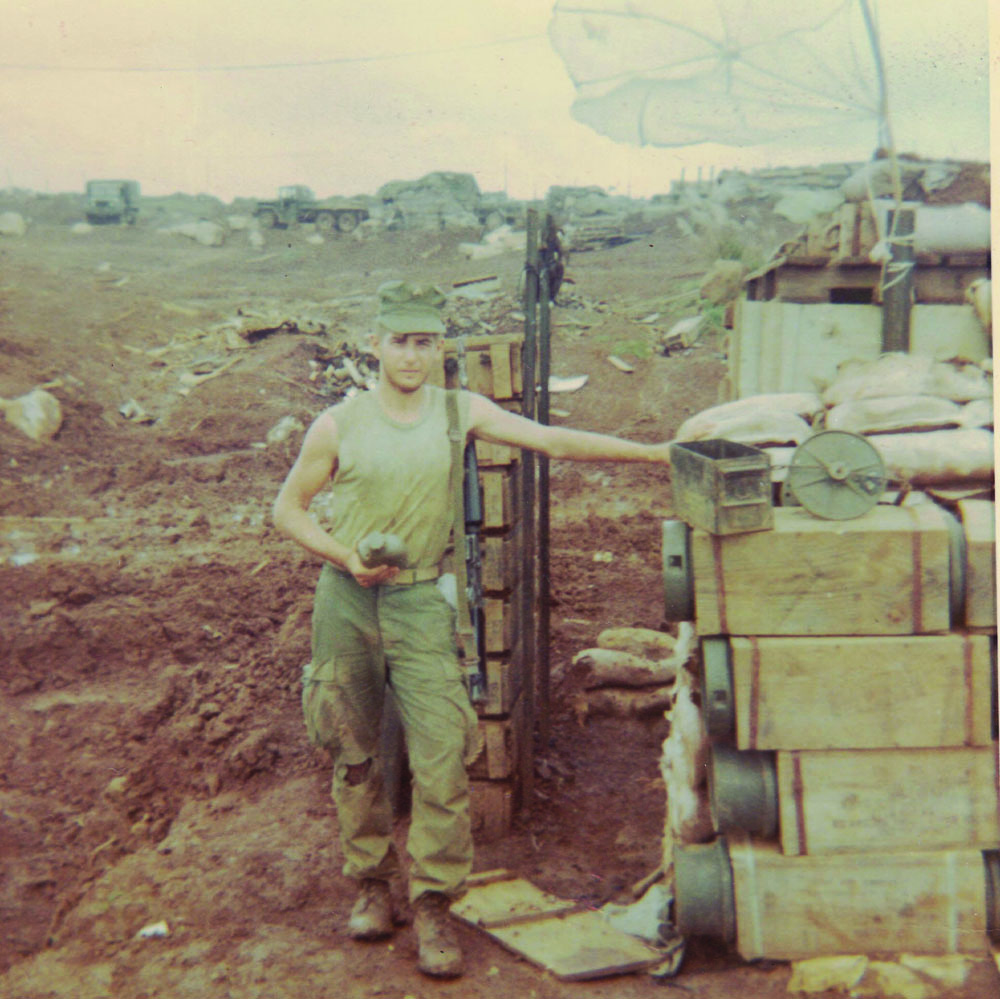
| Bill Ehrhart at Con Thien. |

|